When you sell in Auburn, your home does not need to look like a showroom to stand out. It needs to feel clear, polished, and easy for buyers to picture themselves in from the first photo to the final walkthrough. If you want a staging plan that feels elevated without wasting money on the wrong updates, this guide will show you where to focus and why it matters in Auburn’s market. Let’s dive in.
Why staging matters in Auburn
Auburn is growing, and so is the pool of people paying attention to its housing market. The city’s population was estimated at 83,757 as of July 1, 2024, up 9.4% from 2020, while Lee County reached 187,847, up 7.7% over the same period. That growth supports steady interest from a mix of owner-occupiers and university-connected households.
Pricing also makes presentation more important, not less. Redfin reported a March 2026 median sale price of $405,000 with homes selling in 31 days, while Realtor.com reported a median listing price of $468,100, 42 days on market, and a 100% sale-to-list ratio. Those sources track different metrics, but together they suggest that buyers are paying close attention to value, condition, and visual appeal.
National staging data supports what many Auburn sellers already suspect. In NAR’s 2025 Profile of Home Staging, 83% of buyers’ agents said staging made it easier for buyers to visualize a home as a future home. The same report found that 49% of sellers’ agents said staging reduced time on market, and 29% said it increased offered dollar value by 1% to 10%.
Design-forward staging explained
Design-forward staging is not about filling your house with trendy furniture or making every room look dramatic. It is about editing the space so the layout, light, and function come through clearly. In Auburn, that often means a home feels more inviting online and more natural in person.
This approach fits The Nest Collective’s style well because it focuses on thoughtful presentation, not over-styling. You want buyers to notice the home itself, not a distracting color palette, oversized accessories, or furniture that fights the scale of the room. The goal is calm, clean, and intentional.
Start with the rooms buyers notice most
NAR found that buyers’ agents most often prioritized the living room, primary bedroom, and kitchen. Sellers’ agents also commonly staged the living room, primary bedroom, and dining room. If you want the biggest impact, start there.
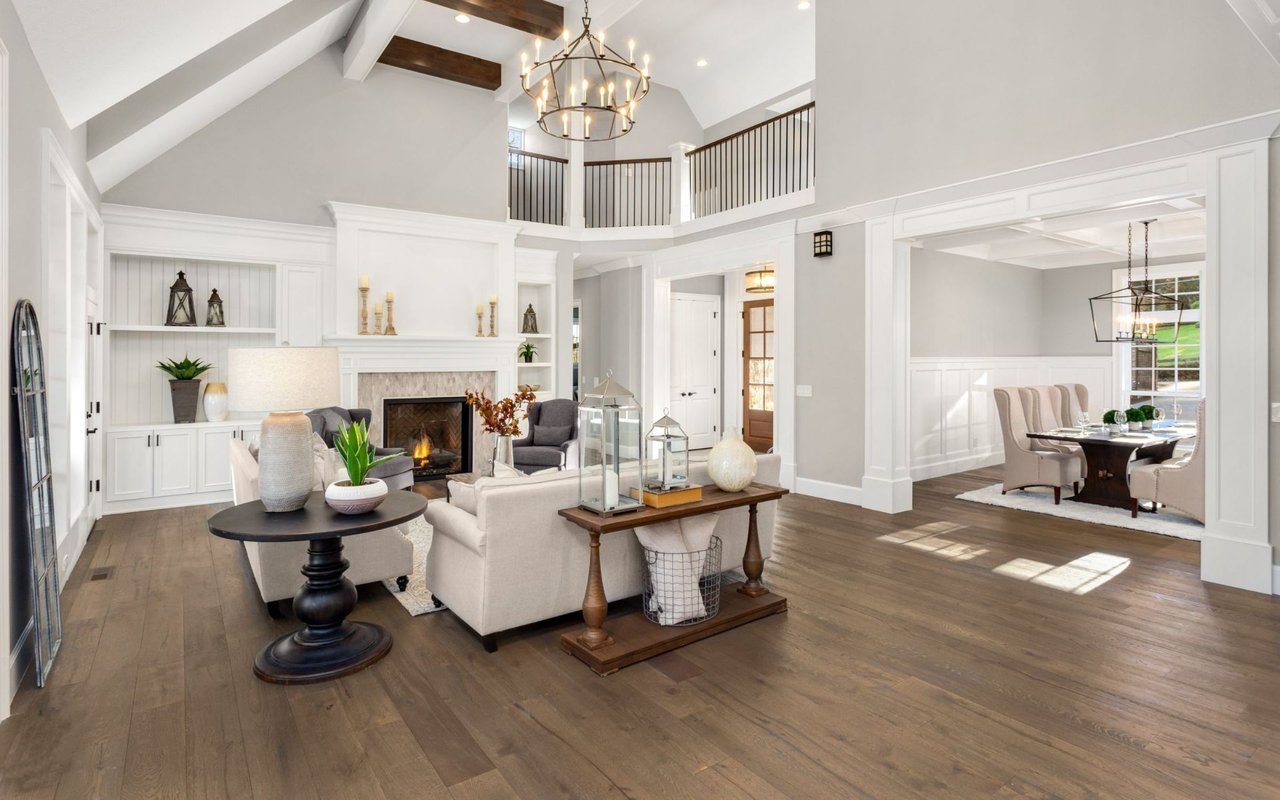
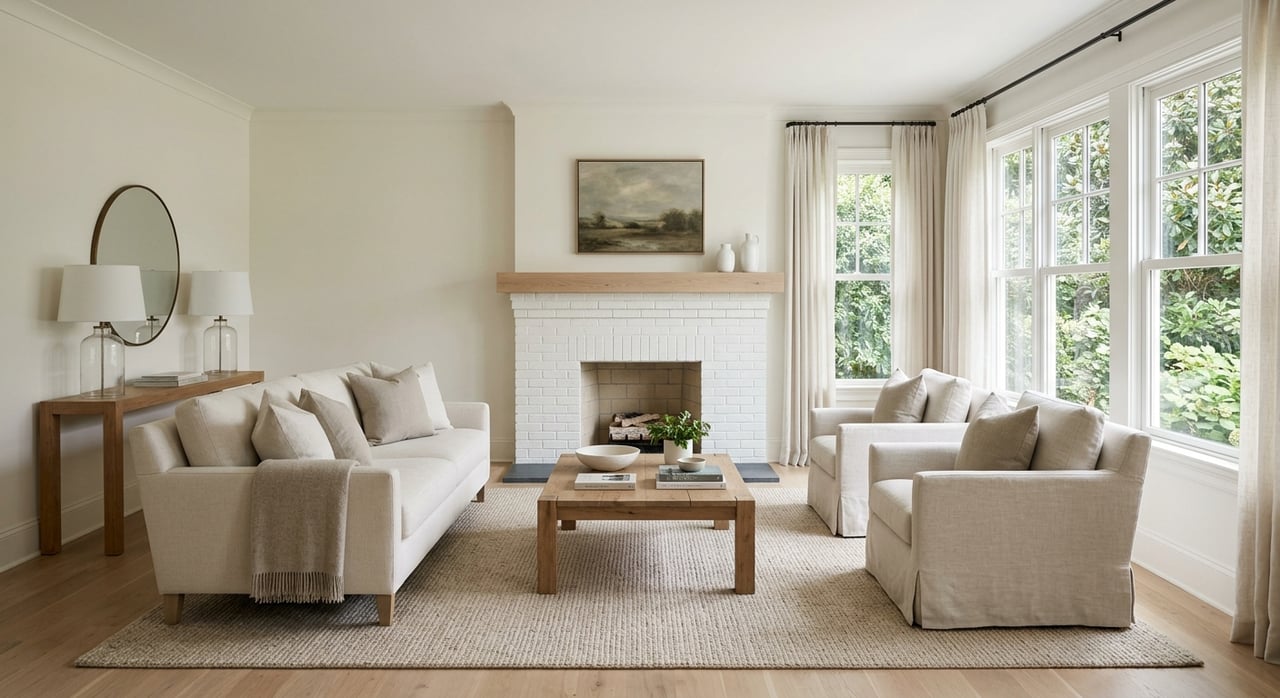
Living room first
Your living room often does the heavy lifting in listing photos. It should feel open, balanced, and easy to understand at a glance. That means fewer small pieces, cleaner surfaces, and a furniture layout that supports conversation and circulation.
If the room feels crowded, remove rather than add. A slimmer coffee table, fewer side chairs, and less visual clutter can make the space feel larger in photos. Keep styling simple so the eye goes to windows, ceiling height, flooring, and architectural details.
Primary bedroom calm
The primary bedroom should feel restful and spacious. Crisp bedding, fewer personal items, and clear nightstands usually do more than decorative extras. Buyers respond to a room that feels easy to move through and easy to maintain.
If your bedroom furniture is oversized, consider removing one or two extra pieces. A bench, bulky chest, or accent chair can make the room look tighter than it is. The best staging choice is often the one that gives the room more breathing space.
Kitchen polish
You do not need a full remodel to improve kitchen presentation. In Auburn, market guidance points to cosmetic updates like paint, fixtures, and landscaping as improvements that typically pay off, while major renovations rarely return full cost. That makes a staging-first strategy especially practical.
Clear counters, hide cords, remove extra countertop appliances, and keep finishes visually consistent. Even small changes like fresh hardware, a simplified shelf, or better lighting can make the room read better in photos. Buyers want to see workspace, storage, and flow.
Dining area definition
A dining room or dining area should help buyers understand how the home lives day to day. Keep the table scaled to the room, avoid too many chairs, and use one simple centerpiece if any. You want the room to feel useful, not overly formal or overfilled.
In open layouts, the dining area can help define zones. That is especially helpful in a market like Auburn, where buyers may be comparing homes with flexible living patterns and different household needs. Clear room definition helps each area feel purposeful.
Stage for flexibility, not excess
Auburn’s average household size is 2.45, and 19.3% of residents are under 18. Auburn University also enrolled 34,145 students in 2024-2025, which adds another layer to local housing demand. While every buyer is different, this mix suggests that flexible, functional spaces can appeal to a wide range of people.
That does not mean trying to guess who your buyer will be. It means showing each room in a clean, practical way so buyers can imagine their own use. A spare room should read clearly as an office, guest room, or hobby space rather than a catch-all storage zone.
The same idea applies to storage. Organized closets, tidy shelving, and simple drop zones communicate usability. In a design-forward staging plan, function is part of the aesthetic.
Focus on polish over renovation
Many sellers assume they need a long pre-listing project list to compete. In reality, Auburn sellers may benefit more from selective updates and sharper presentation than from major construction. Realtor.com’s local market guidance notes that cosmetic updates such as paint, fixtures, and landscaping typically pay off, while large renovations often do not return full cost.
That is good news if you want to sell without overinvesting. A fresh wall color, cleaned-up landscaping, updated light fixtures, and a more edited interior can shift the entire impression of the home. Buyers often respond to homes that feel cared for, bright, and move-in ready.
Here are a few high-impact staging-friendly improvements to consider:
- Neutral paint touch-ups where walls look tired or marked
- Updated light fixtures if current ones feel dated or too heavy
- Fresh mulch and trimmed landscaping for cleaner curb appeal
- Deep cleaning for floors, baseboards, windows, and tile
- Streamlined furniture layouts that improve flow
- Minimal styling that supports scale and light
Photos matter more than ever
In Auburn, online presentation carries real weight. Census data shows that 98.0% of Auburn households report having a computer and 91.6% have a broadband subscription. NAR also found that buyers’ agents rated listing photos, videos, and virtual tours as important, and 31% said buyers were more willing to walk through a home they had already seen online.
That means staging is not just for showings. It is part of your marketing strategy from day one. Bright natural light, clean windows, open blinds, tidy counters, and hidden cords can directly affect whether buyers decide to book a showing.
A design-forward approach also creates consistency across photos. When every room feels edited and visually calm, the listing feels stronger as a whole. That kind of cohesion supports a more premium first impression.
What staging can cost
Staging does not have to mean a full-home redesign. According to NAR’s 2025 data, the median spend was $1,500 when a staging service was used and $500 when the seller’s agent handled staging personally. For many Auburn sellers, that points to a selective strategy rather than an all-or-nothing one.
In a market with home prices in the mid-$400,000 range depending on the source and metric, a relatively modest staging investment may help support stronger buyer interest and better presentation. The smartest budget is usually the one aimed at the rooms and details buyers notice first. Think editing, light improvements, and polished photography, not expensive overhauls.
A simple Auburn staging checklist
If you want a practical place to begin, start here:
- Declutter the living room, primary bedroom, kitchen, and dining area first
- Remove oversized or extra furniture that blocks flow
- Clear kitchen and bathroom counters as much as possible
- Hide cords, bins, and daily-use items before photos
- Open blinds and clean windows to maximize natural light
- Use simple bedding and limited decor for a calmer look
- Define each room clearly so buyers understand its purpose
- Tidy closets and storage areas to show usable space
- Refresh landscaping and entry areas for stronger curb appeal
- Complete touch-up paint and minor cosmetic fixes before photography
Why a boutique approach helps
Staging works best when it is tailored to your home, not copied from a template. A boutique brokerage with a design-conscious point of view can help you decide what to keep, what to remove, and where a small update will go furthest. That kind of guidance matters when you want your home to feel elevated and authentic.
The Nest Collective’s presentation style fits Auburn sellers who want thoughtful marketing rather than a generic listing plan. With a warm, curated approach and strong local knowledge, the process can feel more manageable and more strategic. When your home is presented with care, buyers can feel that difference.
If you are getting ready to sell and want a smart, design-forward plan for your Auburn home, The Nest Collective can help you create a polished listing story that feels both beautiful and market-ready. Let’s find your place.
FAQs
What does design-forward staging mean for Auburn home sellers?
- It means presenting your home in a clean, polished, and intentional way that highlights layout, light, and function without making the space feel overdecorated.
Which rooms should Auburn sellers stage first?
- The best places to start are the living room, primary bedroom, kitchen, and dining area, since those are the rooms buyers and agents tend to prioritize most.
Is professional staging worth the cost in Auburn?
- It can be, especially if your goal is stronger photos and a cleaner first impression. NAR reported a median spend of $1,500 for professional staging services and $500 when the seller’s agent handled staging.
Should Auburn sellers renovate before listing?
- Not always. Local market guidance suggests that cosmetic updates like paint, fixtures, and landscaping often make more sense than major renovations that may not return full cost.
Why do listing photos matter so much for Auburn homes?
- Auburn households are highly connected online, and buyers often decide whether to visit a home based on what they see first in photos, videos, and virtual tours.
How can Auburn sellers make a home look bigger without remodeling?
- Remove extra furniture, simplify decor, clear surfaces, improve lighting, and define each room clearly so the home feels easier to understand and move through.